
What a cattleman needs to know when the grass is black, the fence is down and the cows still need somewhere to go
September 15, 2026
Bottom Line Up Front
When a prairie fire goes through a cattle operation, putting the fire out is only the first job.
The next morning there are cattle to find, burns and injuries to deal with, miles of fence to inspect, water to secure and a grazing plan that may have disappeared with yesterday’s grass. Before you start rebuilding, document what was lost and call your local USDA office. Several programs can help with livestock, feed, grazing, hauling and fence, but the rules and deadlines aren’t all the same.
And in Colorado this year, there is additional help available for some of the costs of hauling water, feed and cattle after wildfire.
The important thing is to make the calls before the posts are in the ground and the receipts are lost in the pickup.
⸻
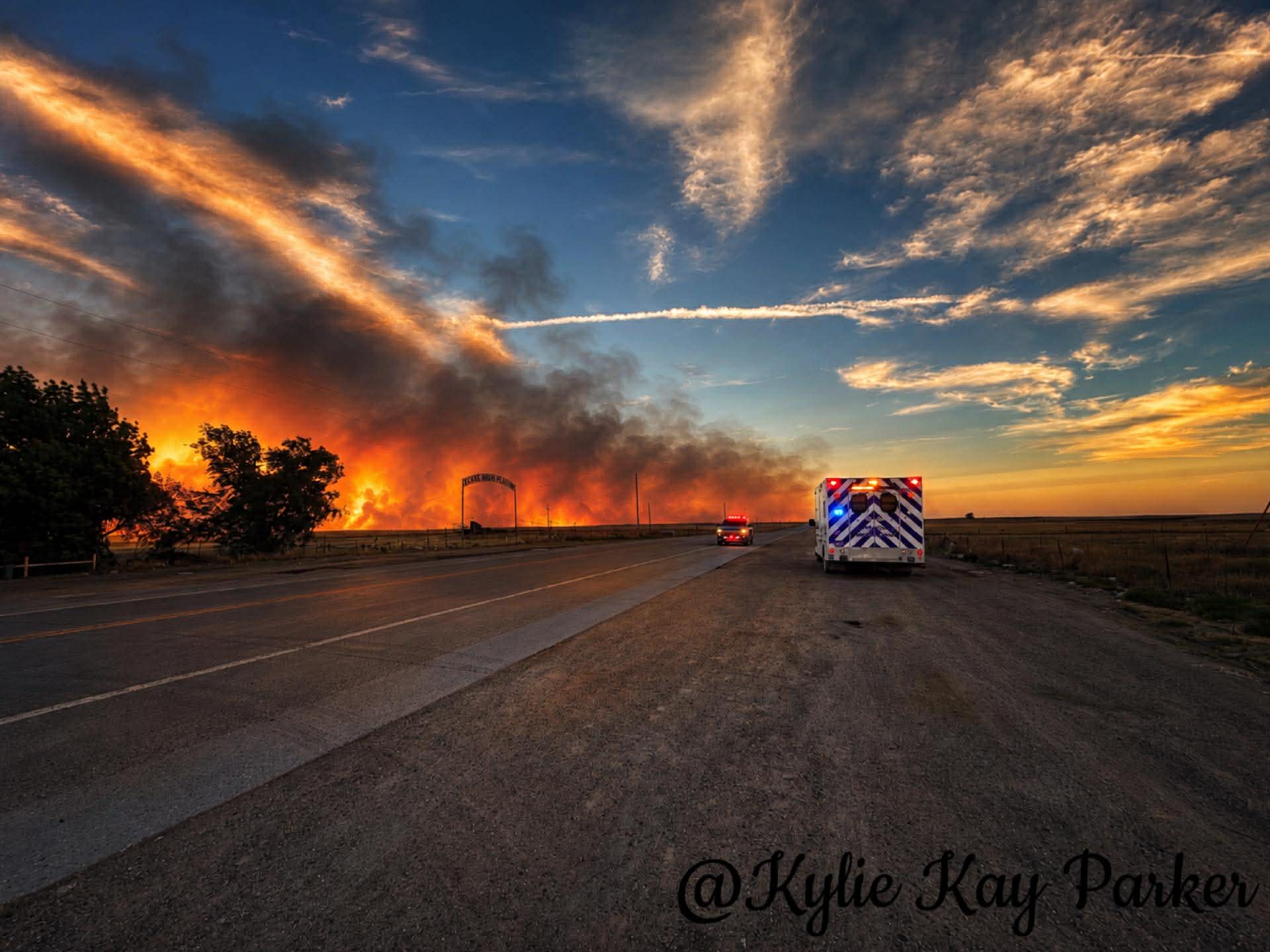
There isn’t much subtle about a prairie fire.
One day there’s grass enough to carry cattle into fall. The next there’s a black section stretching to the horizon, fence posts burned off at the ground and cattle standing around a water tank without much left to eat.
The fire trucks eventually go home.
The cattle don’t.
That’s when the second half of a wildfire begins.
Western Kansas learned that early this year. Fires there burned grazing country, destroyed fence and killed cattle. The Kansas Livestock Association started gathering two things ranchers needed immediately: feed and fencing supplies.
In May, the Sharpe Fire came north out of Oklahoma into Baca County, Colorado. Driven by wind across open country, it burned thousands of acres of Colorado rangeland and threatened Campo.
By late August, Texas was dealing with the Ross Fire. It eventually covered roughly 90,000 acres in Palo Pinto and Jack counties, and early reports put livestock losses above 100 head.
Different fires. Different country.
Same problems after the smoke clears.
Start With the Cattle
Before worrying about government programs, start where a cattleman naturally starts.
Find the cattle.
Account for what is alive, what is hurt and what is missing. Photograph dead livestock before disposal when circumstances allow. Document injuries. Keep track of cattle that have to be sold because they’re injured.
Then start looking at everything that kept those cattle where they belonged and supplied what they needed.
Fence.
Grass.
Hay.
Water.
Corrals.
Tanks and pipelines.
Take pictures before cleanup begins. Keep the herd inventory. Save receipts. Write down where cattle were moved and why.
It may feel a little ridiculous to stop and photograph a burned corner brace when there’s a half-mile of fence lying on the ground. Do it anyway.
Six months later, that photograph may be considerably more useful than your memory of what used to be there.
If You Lost Cattle, Ask About LIP
For qualifying wildfire deaths, USDA’s Livestock Indemnity Program, better known as LIP, is one of the first programs to ask FSA about.
It can provide assistance for eligible livestock deaths above normal mortality caused by a qualifying event. There also are provisions for certain injured livestock that have to be sold at a reduced price.
For 2026 calendar-year losses, USDA’s wildfire guidance for Kansas and Oklahoma gives March 1, 2027 as the deadline for the required notice of loss.
Don’t read that date as permission to wait until February.
The sooner FSA knows what happened—and the better the documentation—the easier it is to determine what qualifies.
Sometimes the Cows Live and You Still Lose the Pasture
This is where wildfire losses get less obvious.
Maybe every cow came through.
That’s good news until you look across 4,000 acres that were supposed to carry them another two months.
A surviving cow still needs something to eat tomorrow.
USDA’s Emergency Assistance for Livestock, Honeybees, and Farm-Raised Fish Program, mercifully shortened to ELAP, can provide assistance for certain qualifying feed and grazing losses.
And Colorado cattlemen have an additional reason to know the program this year.
In July, Colorado FSA announced expanded ELAP flexibility for eligible operations in wildfire-affected counties. It can help with certain additional expenses for hauling water, hauling feed and hauling livestock to available grazing.
That matters in cattle country.
A fire may not kill a single cow but can still leave a rancher loading those cows onto pots and sending them 80 miles to grass—or hauling feed and water to keep them where they are.
Those miles cost money.
For qualifying Colorado claims, the 2026 guidance lists 11 cents per gallon for transporting water. For qualifying feed and livestock transportation, it lists $3.75 per loaded mile for above-normal expenses, subject to the program’s reimbursement formula and mileage limitations.
There are eligibility requirements, including having risk in both eligible livestock and eligible grazing land in a qualifying county. Empty miles aren’t covered, either.
So keep a log.
If you’re hauling water because of the fire, write it down. If hay suddenly has to come from farther away, keep the freight records. If the cows have to go somewhere else, keep the trucking bill.
A stack of receipts in September beats a good guess next February.
No Grass? Ask About CRP
Another 2026 provision could help solve the immediate question of where cattle are going to eat.
USDA authorized emergency use of CRP acres across several wildfire-affected states, including Colorado, Kansas, Oklahoma and Texas. Under the authorization, CRP participants may be able to donate grazing rights or haying authority to livestock producers affected by wildfire.
That doesn’t mean a cattleman can turn cows into the nearest CRP field.
There are eligibility requirements, stocking rates and primary nesting season restrictions, and the details need to go through FSA.
But if the fire took your grass, it’s worth asking.
Sometimes the most valuable disaster program isn’t the one that sends a check. It’s the one that helps you figure out where 300 cows are going next week.
Don’t Get Ahead of Yourself Rebuilding Fence
Burned fence has a way of demanding attention.
The posts are gone. Wire is on the ground. Cattle are somewhere they aren’t supposed to be, and every instinct says to load the pickup with posts, clips and wire and get after it.
Make one phone call first.
USDA’s Emergency Conservation Program, or ECP, can provide assistance with qualifying restoration and replacement of agricultural fence. USDA specifically identifies things such as boundary fence, livestock cross fence and cattle gates as potentially eligible.
But ECP has its own signup periods and requirements.
That’s important because the March 1, 2027 date associated with 2026 LIP and ELAP losses is not a universal USDA wildfire deadline.
After the Kansas fires, for example, Rawlins County had an ECP signup ending April 9. Several Oklahoma counties had an ECP deadline of May 1.
Fence specifications can matter, too.
Government-assisted fence replacement isn’t necessarily a matter of rebuilding the same fence Granddad put there 50 years ago. Applicable specifications may address posts, braces, wire, spacing and construction.
So before spending thousands of dollars and several days rebuilding:
Call FSA.
Ask whether the fence qualifies. Ask whether they need to see it before work begins. Ask what specifications apply.
There’s no prize for building the same fence twice.
The Ground May Need Help Too
After the cattle are handled and the immediate infrastructure problems are under control, take another look at the country itself.
NRCS can provide technical assistance for land recovering from natural disasters, and programs such as EQIP may be available for qualifying conservation practices.
That becomes more important where fire leaves erosion concerns, damaged water developments or other conservation problems that won’t be fixed with a roll of barbed wire.
Not every burned pasture needs a government program. But if the land has a problem that will still be there after the grass greens up, NRCS is worth a conversation.
Not Every Kind of Help Comes From Washington
Colorado cattlemen have another option in 2026.
The Colorado Cattlemen’s Foundation established a wildfire relief fund to assist livestock producers with agricultural recovery expenses that remain after insurance, government programs and other sources of assistance.
The fund can potentially help with things such as fencing, agricultural structures, feed and other recovery and rebuilding expenses.
American AgCredit contributed $10,000 to launch the effort, with additional support from the Scripps Howard Fund.
That’s an important distinction.
A cattleman doesn’t necessarily choose between USDA assistance or private relief. One program might address dead cattle, another the lost grazing, another fence, and private assistance may help with eligible expenses left over.
A wildfire doesn’t arrive with its losses conveniently sorted by government program.
Recovery shouldn’t be expected to work that way either.
Keep the Tax Man in the File Cabinet
There’s one more folder worth keeping.
If wildfire or drought forces cattle sales that otherwise wouldn’t have happened, keep those records separate and talk with whoever handles your taxes.
Federal tax provisions can apply to certain weather-related livestock sales and involuntary conversions. Exactly how they apply depends on the circumstances.
That’s a question for the tax professional after the dust settles.
For now, keep the paperwork.
What To Do When the Smoke Clears
You don’t need to memorize LIP, ELAP, ECP, EQIP and every other acronym somebody in Washington has invented.
You need to remember the order of operations.
Find the cattle. Document the loss. Secure grass, feed and water. Call FSA. Then start rebuilding.
Photograph things before tearing them out. Keep trucking and feed receipts. Record cattle deaths and injuries. Keep mileage and water-hauling records. And before rebuilding miles of burned fence, find out whether assistance is available and what the requirements are.
After that, determine which pieces of the loss fit which programs.
The local USDA Service Center can help sort through the acronyms.
So What?
A prairie fire can cover a lot of country in an afternoon.
Recovering from one takes considerably longer.
The cattle that made it through still have to eat and drink. The fence still has to go back up. Somebody still has to pay the trucker. The ranch still has to make it through the year.
There is help available in 2026, and some of it is substantial. But disaster programs work a lot better when the producer has photographs, receipts, herd records and a phone call to FSA made before the evidence disappears and the rebuilding starts.
So when the fire is finally out, take care of the cattle first.
Then, before you stretch the first new wire, take pictures, keep the receipts and make the call.
The grass will come back.
The paperwork won’t grow itself.
⸻
Sources: USDA Farm Service Agency Colorado State Office, July 30, 2026; USDA Farm Production and Conservation wildfire assistance guidance for Kansas and Oklahoma, March 17, 2026; Colorado Cattlemen’s Foundation; regional 2026 wildfire reporting from Kansas, Colorado and Texas.