
Bottom Line
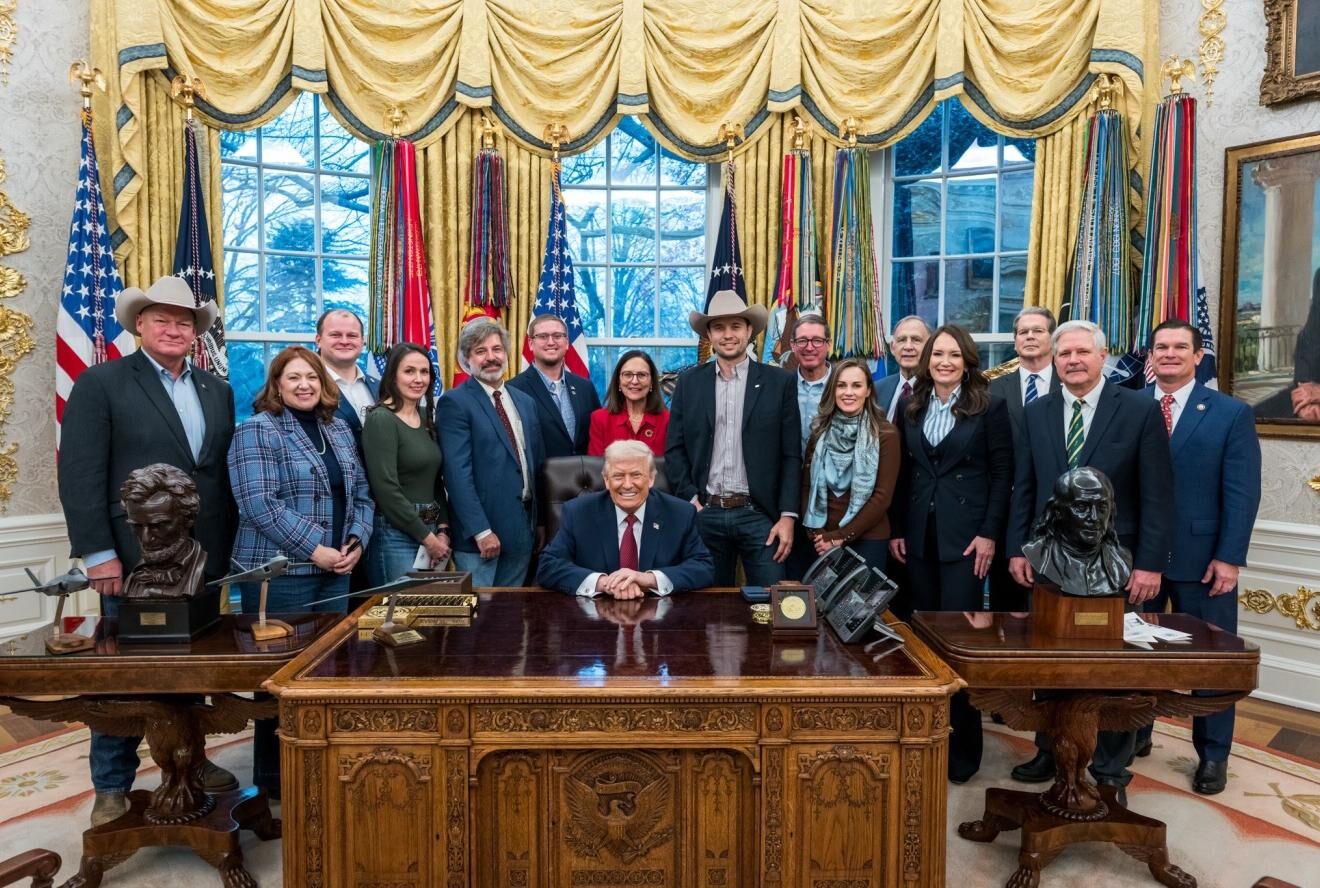
President Trump signed two executive orders on September 4 aimed specifically at the U.S. cattle industry. Together, they direct federal agencies to increase scrutiny of meatpacking competition, expand opportunities for smaller processors, examine mandatory country-of-origin labeling for beef, and reconsider federal policy surrounding wolf predation and livestock losses.
For cattlemen, the important distinction is between what the executive orders actually changed and what they merely set in motion.
Mandatory country-of-origin labeling has not been reinstated. Gray and Mexican wolves have not been delisted. State-inspected beef has not suddenly been cleared for unrestricted interstate sale. And the orders do not guarantee cattlemen 100% market-value compensation for livestock killed by protected predators.
Instead, the orders establish reviews, enforcement priorities and administrative processes—many with deadlines of 60 or 90 days—that could lead to more consequential policy changes later.
That makes the next several months more important than the headlines surrounding the orders themselves.
Why the Administration Is Acting
The White House places the orders in the context of an unusually tight U.S. cattle supply. The administration says the national cattle herd is at a 75-year low, while consumer demand for beef has increased nearly 10% over the past decade.
Rebuilding that supply is not something that can happen quickly. Retaining heifers today means foregoing their immediate sale and waiting for those females to enter the breeding herd, produce calves and eventually add pounds of beef to the supply chain.
The two executive orders approach the problem from different directions.
One focuses primarily on competition and processing capacity. The other takes a broader look at federal policies affecting ranchers, including country-of-origin labeling and livestock predation.
More Scrutiny of Packers and Processing
One executive order directs USDA to step up enforcement of the Packers and Stockyards Act, including investigations into potentially unfair, discriminatory, deceptive, price-manipulating or commerce-restraining practices.
USDA is also directed to increase enforcement resources and coordinate with the Department of Justice when potential antitrust cases warrant it.
Within 60 days, USDA must report to the President on existing enforcement activity, the resources needed for additional enforcement and its plan for heightened enforcement over the following year.
That is a meaningful change in enforcement priority, but it should not be confused with a finding that any particular packer has violated the law.
The order also turns attention toward smaller and regional processors.
USDA is directed to increase participation in programs that can provide alternatives to conventional federal inspection, including the Cooperative Interstate Shipment Program and other federal-state inspection arrangements. The department is also instructed to improve technical assistance for small and very small processors and examine unnecessary reporting or overly prescriptive requirements while maintaining food-safety standards.
A new USDA coordinator is intended to connect ranchers and small- and medium-sized processors with these opportunities.
The order also directs USDA to identify legal and regulatory barriers preventing greater interstate movement of state-inspected and custom-exempt meat and to establish, within existing legal authority, a guaranteed-loan program intended to strengthen small and regional beef processing.
What this does not mean
The order does not simply make all state-inspected or custom-exempt beef legal for interstate commercial sale.
Some barriers are established by federal law and cannot necessarily be removed by executive action. The order directs USDA to use the authority it already possesses and identify remaining obstacles that may require additional action, including legislation.
For cattlemen interested in direct marketing or alternatives to the largest processors, the eventual importance will therefore depend heavily on USDA implementation.
Is Mandatory Country-of-Origin Labeling Back?
No—not yet.
The second executive order puts mandatory country-of-origin labeling, or MCOOL, firmly back on the federal cattle-policy agenda, but it does not itself reinstate the former labeling requirement.
USDA, working with the U.S. Trade Representative, has 90 days to identify what authority currently exists to require country-of-origin labeling for beef and to analyze the potential economic effects of such a requirement.
After that work is completed, USDA may pursue regulatory changes where existing law gives it sufficient authority. Where it does not, the administration can develop recommendations for Congress.
That distinction matters.
A package of beef at the grocery store will not acquire a new mandatory country-of-origin label tomorrow because the President signed this order. The administration has instead started the process of determining whether and how such a requirement can legally be established.
Trade obligations are also likely to matter. Previous U.S. mandatory country-of-origin requirements for beef and pork became the subject of a long-running dispute at the World Trade Organization before Congress repealed those requirements in 2015.
So while MCOOL has clearly returned as a policy objective, its final form—and whether it ultimately takes effect—remain unsettled.
Did the Executive Order Delist Wolves?
No.
The order directs the Department of the Interior to examine the status of gray wolves and Mexican wolves under the Endangered Species Act.
Within 90 days, Interior is to determine whether those populations meet the applicable criteria for delisting or downlisting. If the department concludes that they do, it is directed to begin the appropriate process.
Beginning a delisting process and actually removing a species from Endangered Species Act protection are not the same thing.
The administration is also considering changes affecting the circumstances under which problem predators can be lethally removed.
For cattlemen in areas with wolf depredation, these provisions could eventually be significant. But existing protections should not be assumed to have disappeared because the executive order was signed.
Does the Order Guarantee Full Compensation for Predator Losses?
No.
Some descriptions of the administration's cattle initiatives have suggested ranchers will receive compensation equal to 100% of market value for livestock killed by protected predators.
That is not what the executive order itself guarantees.
Instead, Interior and USDA are directed to consider changes to regulations, evidentiary requirements and program guidance governing livestock-depredation claims, with the objective of handling legitimate claims more consistently, accurately and promptly.
That could ultimately improve compensation procedures. It is not, by itself, a new guarantee that every confirmed loss will be reimbursed at full market value.
A Broader Review of Federal Ranching Policy
The second order goes beyond wolves and labeling.
USDA, Interior, USTR, FDA and the Small Business Administration are directed to review federal regulations, guidance and policies affecting ranchers and identify changes that could improve financial viability and market access.
Recommendations are due within 90 days.
That makes this partly an executive order about future executive action. Some recommendations may be achievable administratively. Others could require new regulations or action by Congress.
The order also instructs agencies to pursue the administration's cattle policies in a manner that benefits consumers through lower prices to the maximum extent allowed by law.
That creates an important policy balancing act: increasing returns and opportunities for domestic cattle producers while also attempting to make beef more affordable to consumers.
What Cattlemen Should Watch Next
The executive orders are significant because they put several longstanding cattle-industry issues onto a formal federal timetable. But the practical effects will depend on what happens next.
Over the coming 60 to 90 days, cattlemen should watch for USDA's Packers and Stockyards enforcement plan, proposals affecting small and regional processing, the federal analysis of mandatory country-of-origin labeling, and Interior's conclusions concerning wolf status and depredation policy.
Those developments will tell us considerably more than the executive orders alone about what actually changes on the ground.
The distinction is worth keeping clear: an executive order can tell an agency to investigate, review, propose or begin a process without producing the final policy that makes the headline.
For now, MCOOL is under consideration, wolves remain subject to existing law, processing restrictions have not simply disappeared, and predator compensation has not been universally reset to full market value.
What has changed is that each of those issues now has an explicit place on the federal cattle-policy agenda—and, in several cases, a deadline for the next step.
Dey Money
Cattle get worked. Cowboys get paid.